Click below to listen to today’s podcast:
From temps dipping down to 30 below zero in December to 55 degrees in March, no snow to heavy snow… the Winter of 2025/26 has been one for the books. Mother Nature makes her own rules. It was a rough season for my newly planted Butterfly bushes as my “pet” wild rabbit, Eve, chose to PRUNE them by chowing down. While the Diervillas are supposed to be rabbit resistant, hunger and opportunity changes that.
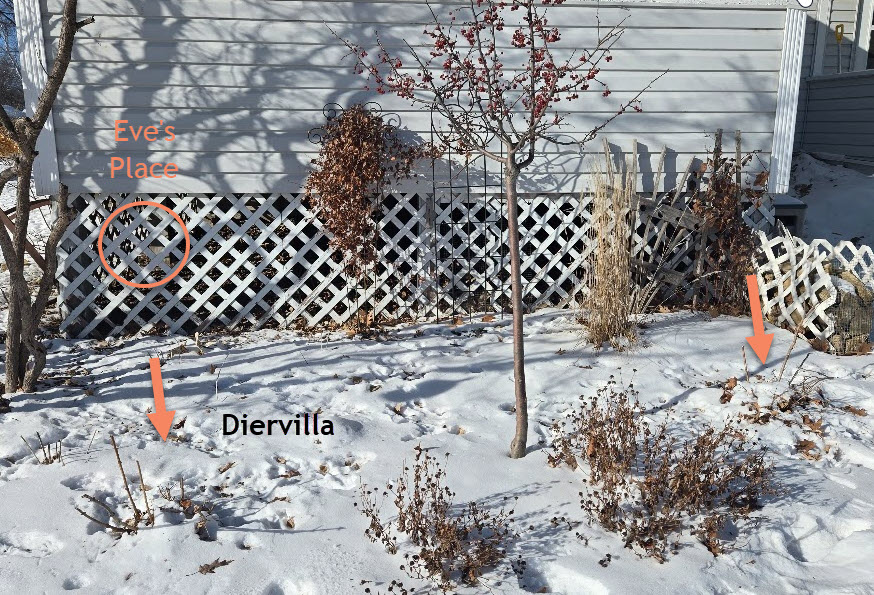
Speaking of pruning, now is NOT the time to prune spring flowering shrubs such as lilacs, however, you can still prune summer and/or fall flowering shrubs through March. Now is a good time to look for damage and prune that out. I did something drastic. My lilacs were WAY overgrown and had blight. My arborist friend, Faith of Treequality, told me they should be cut down to the ground. So, that’s what my partner did. Got the chainsaw out and had at it. I promised pictures of the cut back and now I can’t find them… ugh. Too much snow covering the area right now. But this is what it DID look like:
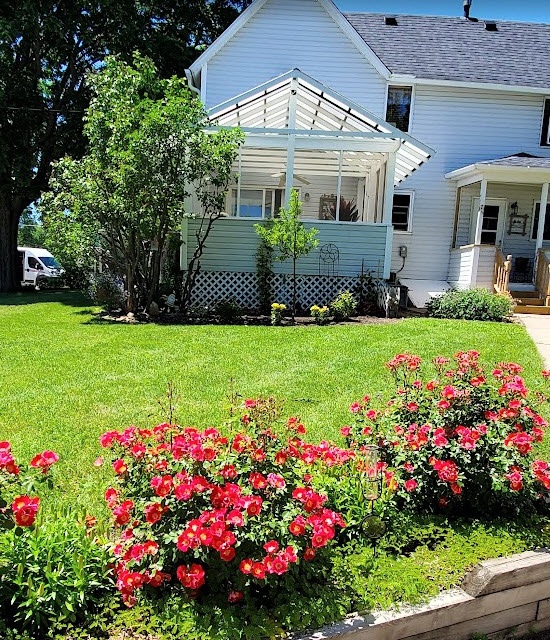
The corner of my porch looks naked now but the shrubs will grow back and be healthier. Patience is the key. Although I allow myself the option to change my mind and plant something else. The issue here will be trying to dig out those roots!
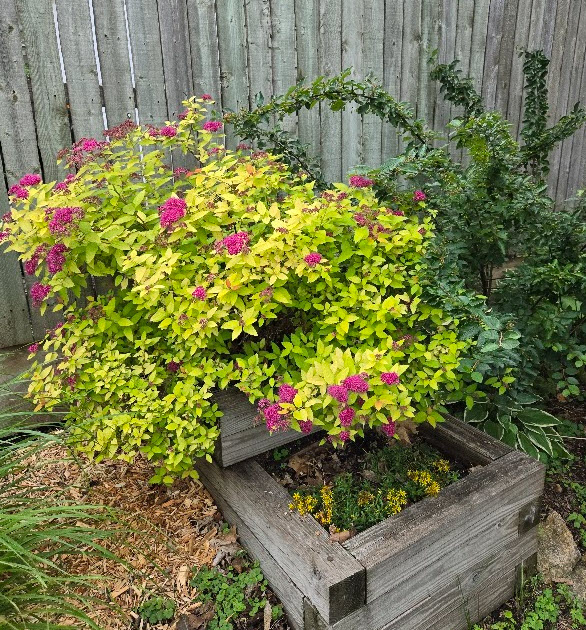
In the meantime pruning is on my list. I have a weigela ‘Very Fine Wine’ that spread out and needs a good pruning. My ‘Candy Corn’ spirea is also in dire need of a pruning.
That means sharpening up the pruners and getting to it. Using dry steel wool rub out any rust spots and use a little machine oil on the pivot point. Check the blades for chips, dings or dents. The thick blade on the bottom is called the anvil, the thinner curved blade is the cutting blade. If you see any dents or metal tags on the anvil, it’s time to sharpen it.
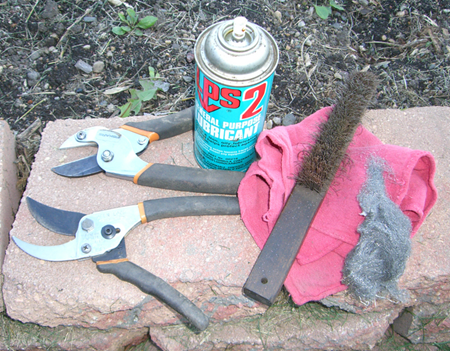
Use a sharpening stone or file to smooth out any burrs or tags, dings or chips. You’re looking to keep a clean right angle on that blade. For the cutting blade, hold the pruners so the cutting blade is parallel to the ground and the cutting edge is away from you.
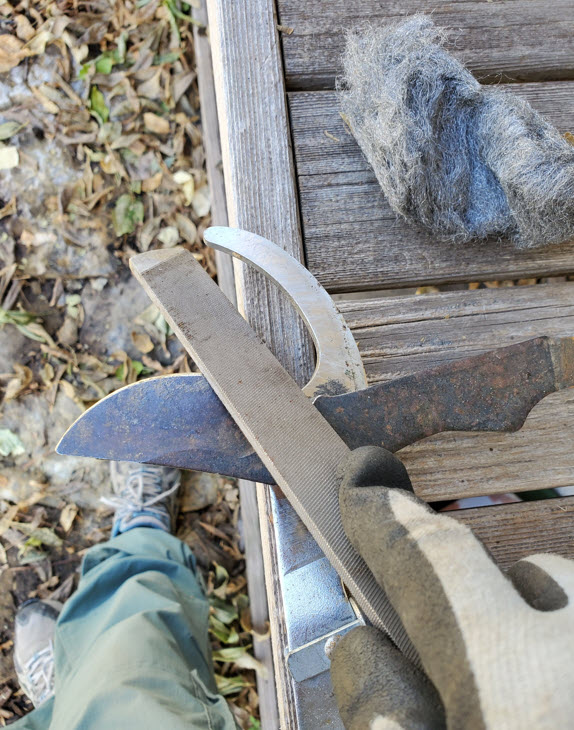
Hold your stone or file at the same beveled angle as the blade and move it across the blade away from your chest, repeat, always moving the sharpening stone or file away from your body. Make an occasional pass on the backside of the blade to smooth out any irregularities and keep a fine cutting edge. When pruning it’s best to cut at an angle rather than a straight edge. Basically, you’re “wounding” the branch so angling the cut directs water away from the wound and helps prevent rot, disease or fungal issues, which helps the plant to heal faster.